Winter is a beautiful time of year, but it brings unique challenges for older adults. Cold temperatures, icy sidewalks, heating issues, and reduced mobility can make daily life more difficult and increase the risk of injuries. Families and caregivers must take a proactive approach to winter safety for elders to ensure that loved ones stay safe, warm, and healthy through the season.
This guide offers a practical, benefit-driven winter safety checklist that covers indoor and outdoor precautions. Whether you’re caring for a loved one at home or exploring senior assisted living options, these insights support a safer and more comfortable winter for older adults.
Why Winter Poses Extra Risks for Seniors
As people age, their bodies react differently to cold weather. Seniors tend to lose body heat faster, experience reduced balance, and may have chronic health conditions that worsen during winter.
Even simple tasks, like walking outside or adjusting heating systems, can become risky. By having a clear winter safety plan, families can reduce these risks and protect their loved ones through thoughtful senior care and preventative steps.
INDOOR WINTER SAFETY CHECKLIST
1. Maintain Safe Indoor Temperatures
Keeping indoor temperatures at a consistent level is essential. Seniors often feel cold more intensely, and a chilly home can quickly lead to hypothermia.
Setting the thermostat between 68–70°F helps maintain a safe environment. Ensuring heating systems are serviced early in the winter prevents unexpected breakdowns during freezing weather. Providing warm blankets, cozy bedding, and draft stoppers around windows further improves comfort.
2. Reduce Carbon Monoxide and Fire Hazards
Winter often means fireplaces, space heaters, and increased use of appliances, which can raise the risk of carbon monoxide exposure or household fires. It’s important to check smoke detectors and carbon monoxide alarms and replace batteries at the start of the season.
Keeping chimneys clean, ensuring proper ventilation, and placing space heaters safely away from fabrics also reduce risks. Seniors should have emergency contacts easily accessible in case of heating or electrical problems.
3. Prevent Indoor Falls
Winter gear like boots, heavy coats, and rugs near entryways can add clutter and create tripping hazards. Seniors benefit from clear hallways, well-lit rooms, and secure flooring.
Removing loose rugs, adding slip-proof mats, and using nightlights make movement safer. Installing grab bars in bathrooms or near steps provides extra support, especially for seniors with mobility challenges.
4. Support Good Nutrition and Hydration
Cold weather often reduces appetite and thirst, yet seniors need proper nutrition to maintain immunity and energy. Warm, easy-to-eat meals like soups and stews encourage regular eating, while herbal teas and warm water promote hydration.
Adding fruits, vegetables, and protein helps support overall health and steady energy levels. Families should gently remind seniors to drink water throughout the day, even if they don’t feel thirsty.
5. Prepare for Winter Emergencies
Winter storms can cause power outages or make it difficult to leave home. Having an emergency kit brings peace of mind. This may include flashlights, batteries, non-perishable foods, warm blankets, and backup chargers.
Keeping extra medications on hand is essential. Families should check on seniors regularly during storms to ensure they are safe, warm, and have everything they need.
OUTDOOR WINTER SAFETY CHECKLIST
1. Reduce the Risk of Slips and Falls on Ice
Icy driveways and sidewalks are among the greatest winter hazards for seniors. Falls can lead to serious injuries, making prevention crucial. Clearing snow promptly, using ice melt, and keeping pathways dry and even can significantly reduce risks.
Seniors should wear proper winter footwear with good traction and avoid unnecessary trips outdoors during or immediately after winter storms.
2. Dress in Proper Layers
Dressing appropriately for winter helps seniors maintain a safe body temperature. Thermal layers, water-resistant jackets, hats, gloves, and scarves offer essential protection from cold winds.
Even short trips outside can be dangerous without adequate clothing. Well-fitted winter boots also help prevent slipping and protect against frostbite.
3. Make Outdoor Entrances Safer
Outdoor entryways should be dry, well-lit, and clutter-free. Installing motion sensor lights helps seniors see steps and paths clearly after dark.
Handrails along stairs or ramps provide stability, especially in snowy or icy conditions. Using non-slip mats outside entrances helps prevent accidents when seniors return home with wet shoes.
4. Ensure Safe Transportation
Driving in winter is more difficult for older adults due to slower reflexes and reduced visibility. Seniors may feel anxious about driving on icy roads.
Planning appointments around the weather, using trusted transportation services, or asking family members to drive can help keep them safe. Encouraging seniors to limit driving during storms protects them from avoidable risks.
5. Stay Connected and Supported
Isolation increases during winter, particularly when weather makes travel difficult. Regular check-ins from family or caregivers help seniors feel emotionally supported and physically safe.
Simple conversations can reveal early signs of health changes, heating issues, or mobility problems. Staying socially connected also helps reduce winter depression and loneliness.
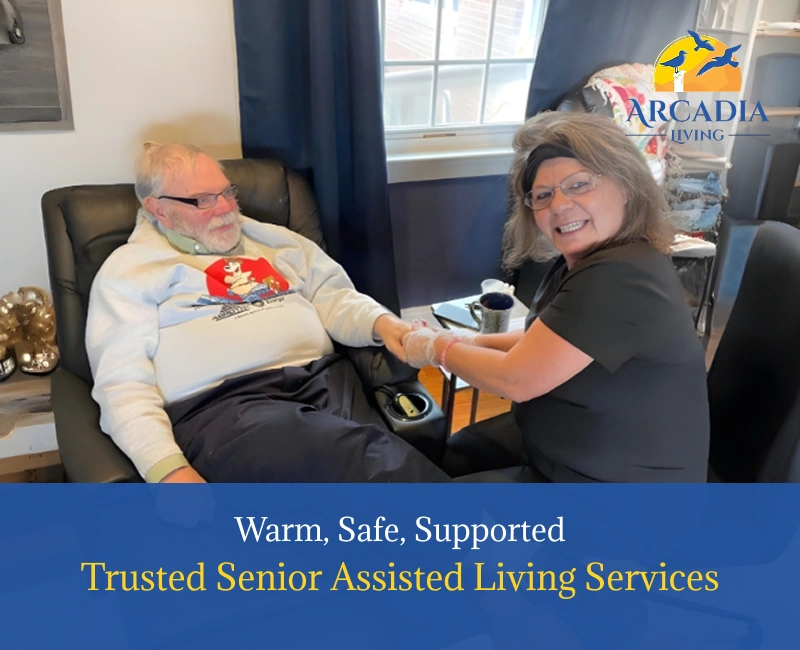
How Senior Assisted Living Enhances Winter Safety
Families often struggle to manage all aspects of winter safety alone, especially when balancing work, caregiving, and emergencies. Professional elderly care services and assisted living services provide an important layer of protection.
Arcadia Assisted Living offers warm, secure environments with 24/7 support, supervised mobility assistance, nutritious meals, emergency preparedness, and reliable transportation. Seniors benefit from social engagement, monitored health, and immediate help when needed.
We have been setting the standards since 2006, proudly voted the Best Assisted Living in MD and honored as the Winner of “Best on the Shore” for 13 years in a row. With assisted living homes in Easton, Chester, Crofton, and Denton, we serve seniors in the surrounding localities with exceptional dedication and care.
Frequently Asked Questions
1. What is the most common winter danger for seniors?
2. Are space heaters safe for seniors?
Space heaters can be safe if used correctly, kept away from fabrics, placed on stable surfaces, and turned off when unattended.
3. Do seniors need to drink as much water in winter?
Yes. Even though seniors may feel less thirsty, dehydration is still a concern. Warm drinks can help increase fluid intake.
4. How can families check on seniors who live alone during winter?
Daily phone calls, scheduled visits, and remote monitoring tools help ensure that seniors remain safe and supported.